

As temperatures plummet, a woodburning stove can be a source of comfort and warmth. However, because of the temperature, you could get a ‘cold backdraft’, where smoke is pushed into your living space, often exacerbated by a ‘cold plug’ or negative pressure situations.
Washington Fireplaces is dedicated to helping you understand and overcome these challenges with a detailed guide to ensure your fire remains a haven of warmth.
Understanding the Culprits: Cold Plug and Negative Pressure
Cold Plug: This occurs when the air inside the chimney, colder and denser due to outside low temperatures, fails to rise. It creates a downward draft that pushes smoke back into the room and is more common on twin walls. Warming the chimney and then establishing a strong initial fire is key to preventing this problem.
Negative Pressure: Modern homes are often well-insulated and sealed, which can lead to negative pressure issues. When exhaust fans, dryers, or even central heating systems expel air from the house, the same amount of air must re-enter. If the house is too sealed, it can cause a lower pressure inside than outside, pulling smoke back into the house through the stove. Balancing indoor and outdoor pressure is crucial in these scenarios.
Additional – Wet Wood: Many people assume because the wood doesn’t feel damp that it is the proper wood to use. Your wood must be properly dried for at least 6-12 months for it to be ‘seasoned’. Seasoned wood burns hotter than unseasoned. Find your closest approved wood supplier with Wood Sure – https://www.woodsure.co.uk/find-a-supplier/
Additional – High Winds: Normally strong winds are not a problem for a good woodburning stove but if you are having issues with a cold plug or negative pressure then high winds can make it a bit more difficult to build up the heat in your system.
Preventive Measures and Solutions
Preheating the Chimney Flue: Before warming up your stove try to leave the door open for 30 minutes so the air temperature has a chance to normalize. Before lighting the main fire, burn a small amount of kindling at the base of the chimney. When the flue is all warmed up, you should feel the draft reverse the airflow and go up. If the airflow continues to push out it may need much more heat. Warming up the flue gradually from cold to very hot helps warm the full system and not just the stove itself.
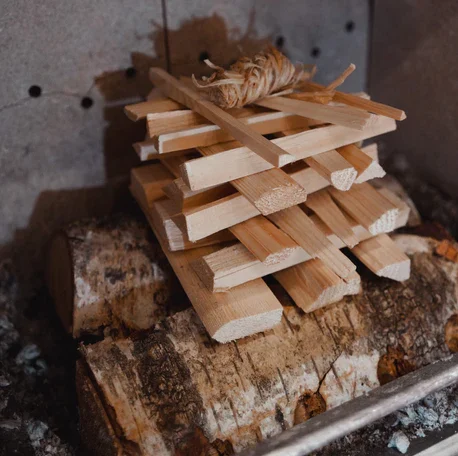
Start with a Very Strong Robust Fire: Using dry, high-quality wood and kindling, and using a substantial amount can help create a strong fire quickly. This heats the chimney, dispelling the cold plug, and establishes a good draft. We recommend what we call the Jenga method aka the Top Down or Upside Down method.
Adequate Air Supply: Adjust the stove’s air vents and consider slightly opening a window in the same room when starting the fire to introduce fresh air and help balance the pressure.
Regular Chimney Maintenance: Ensure your chimney is clean and free from obstructions. This improves airflow and prevents smoke from lingering and eventually entering your home. We recommend a yearly service to check for blockages. But this depends on how often you use the stove.
Why Tackling These Issues is Crucial
Ignoring signs of cold backdraft and negative pressure can lead to increased smoke and soot in your home. Efficiently burning stoves require less fuel, reducing both your costs and environmental footprint.
At Washington Fireplaces, we believe that a well-maintained wood-burning stove is the heart of a warm home. By understanding the intricacies of cold backdraft and negative pressure, and taking proactive steps to counteract them, you can ensure that your stove provides efficient, comfortable heat all winter long.
For any concerns or additional support, our team is here to assist you. Stay warm, safe, and enjoy the crackling comfort of your woodburning stove with confidence!
Official guidance from HETAS:
A ‘cold plug’ in your flue can be an unexpected issue during the colder weather. It is an invisible plug of cold air that can form in your chimney when temperatures drop significantly, and the chimney is left to go cold. This can result in the flue being plugged, which pushes smoke back down and out of your stove.
It can occur overnight during a sudden drop in temperature when your stove is not on or when a clear chimney has not been used for a long time. Also, it’s more common to happen in a twin wall flue system as they can be more exposed.
Learn more from HETAS: https://www.hetas.co.uk/cold-plug-winter-safety-advice-for-stove-users/
*Whilst we try our utmost to ensure all information and advice is accurate, it’s provided as a general guide only and may not apply to your specific circumstances or your specific product. For more detailed advice please feel free to contact us using our contact page. Thank you.
Comments (1)
Steven Holiday - 10 January 2024
Had the cold plug problem with our stove. Made a small/medium fire with the stove door open a little to let the system heat up, after 25 minutes I felt the breeze reverse then I knew it was time to add the bigger firewood.