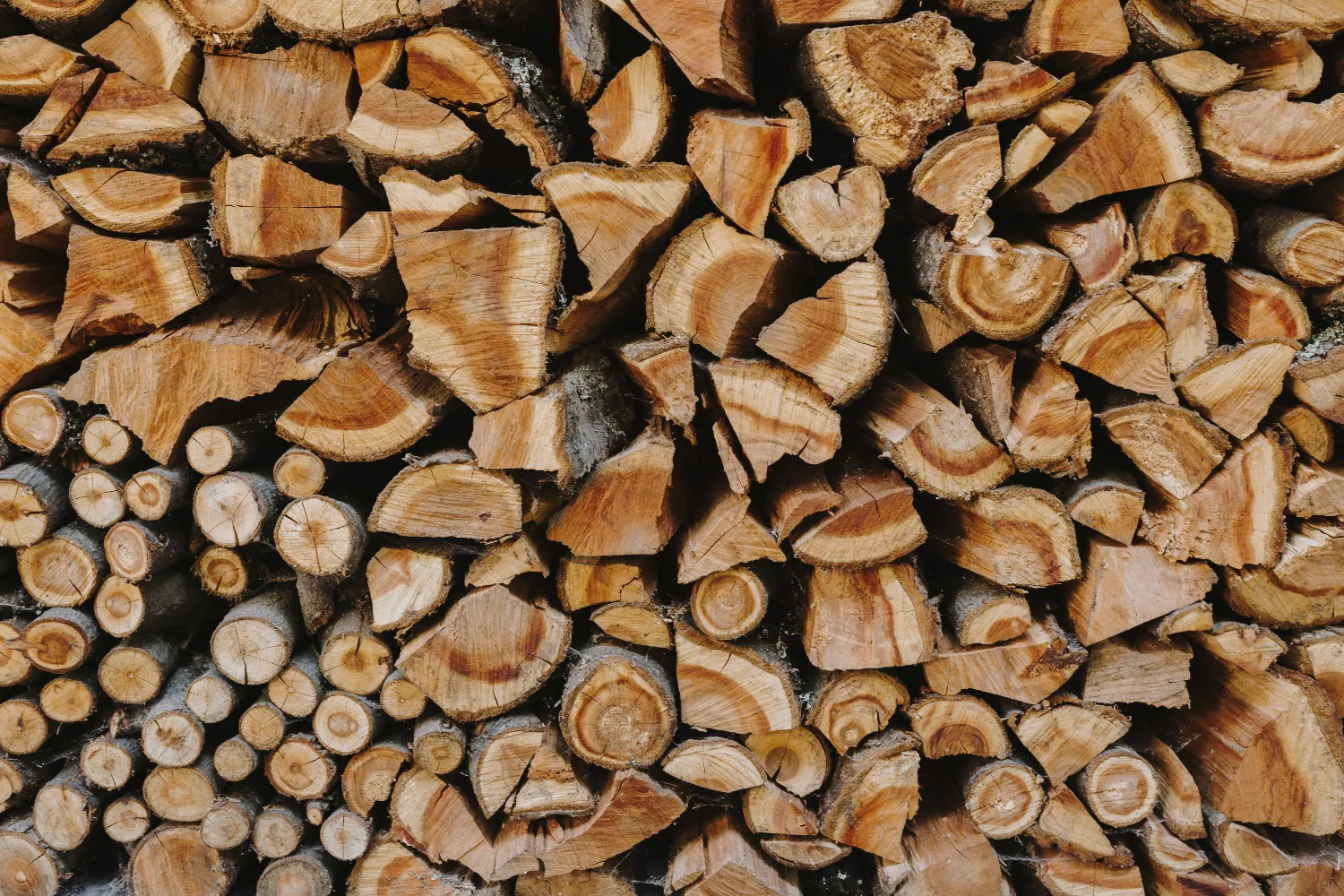

We offer a wide variety of wood-burning stoves on live display in our expansive showroom. Our selection caters to all tastes and requirements, whether you’re looking for traditional designs or modern cylinder designs. To get the most out of your wood-burning stove, it’s crucial to use the right kind of wood—specifically, wood that has been properly seasoned. Seasoning wood not only ensures your stove operates efficiently but also helps minimize smoke and prevent the buildup of creosote, a common cause of chimney fires.
What Does “Seasoned” Wood Mean?
Seasoned wood refers to wood that has been allowed to dry until its moisture content is reduced to about 20% or less. Freshly cut wood can contain up to 50% water, making it inefficient for burning; it produces more smoke and less heat. Seasoning the wood ensures it burns hotter, cleaner, and more efficiently, providing the optimal performance for your wood-burning stove. If the wood is not seasoned, the fire has to use more energy to evaporate the moisture before it begins to burn the wood and produce heat.
Choosing the Right Type of Wood
In the UK, there’s a variety of hardwoods and softwoods available for burning, each with its own set of characteristics. Hardwoods such as oak, ash, and beech are dense and provide a long, slow burn, making them ideal for wood-burning stoves. Softwoods like pine and spruce can be used but tend to burn faster and with more creosote; they’re better suited for kindling rather than as the main fuel. Regardless of the type, the wood should be dry and well-seasoned. We have a short blog on UK wood types to assist – Choosing the Best Wood for Your Stove in the UK.
Preparing Wood for Seasoning
After selecting your wood, the next step is to prepare it for seasoning. This involves cutting the wood into manageable pieces, typically 6-8 inches wide and 18-24 inches long, to fit your stove. Splitting the wood into smaller sections increases the surface area, speeding up the drying process. The best time to cut and split wood is in late winter or early spring, allowing it ample time to season before the cold weather arrives.
Storing Wood for Seasoning
Proper storage is key to seasoning wood effectively. Wood should be stacked off the ground, on pallets or rails, to allow air to circulate underneath. Stacks should be placed in a sunny, open area to benefit from the sun’s warmth and the breeze, which help remove moisture. Avoid covering the entire stack with a tarp; instead, cover the top to protect it from rain while allowing air to circulate through the sides. Airflow is key to the drying process.
How Long to Season Wood
The length of time required to season wood depends on the wood type and the conditions under which it’s stored. Generally, hardwoods take longer to season than softwoods, with a seasoning period ranging from 6 months to 2 years. A good rule of thumb is to allow wood to season for at least one summer season. You can tell if the wood is well-seasoned by checking for cracks in the ends, lighter weight, and a hollow sound when two pieces are knocked together. The most reliable way is generally to use a moisture meter.
How to measure moisture content?
A moisture meter can be your best friend. As the name suggests a moisture meter measures the moisture content inside the wood. There are two main types of meters: pin-type and pinless.
Pin-Type Moisture Meters:
- These meters have two metal pins that are inserted into the wood. The meter measures the electrical resistance between these pins, which changes with moisture content. The higher the moisture content, the less resistance there is, as water conducts electricity.
- To use a pin-type meter, simply press the pins into the wood, ideally at a depth of about ¼ of the thickness of the piece, since moisture content can vary from the surface to the core. It’s best to test several areas at different depths to get a more accurate overall reading.
Pinless Moisture Meters:
- Pinless meters use electromagnetic sensors to measure moisture without needing to penetrate the wood’s surface. This type is particularly useful for finished surfaces or when you want to avoid making holes.
- Place the meter flat against the wood’s surface, and it will give a reading based on the density of the wood and the electromagnetic field changes caused by moisture.
It generally gives a moisture content as a percentage, for wood-burning stoves you need at least a level of 20% or less to be seasoned.
Discover more in our showroom!
By following these guidelines for selecting, preparing, and seasoning wood, you can ensure that your wood-burning stove operates at its best, providing warmth and comfort for your home throughout the cold months. Visit our showroom in the Northeast to explore our vast selection of wood-burning stoves and to find more tips on getting the most out of your stove this/next winter.
Comments (1)
Steven C - 28 February 2024
Nice post. I use birch to get it started easily then switch to oak which lasts much longer. Saves time on refuelling and has a nice, bright flame.